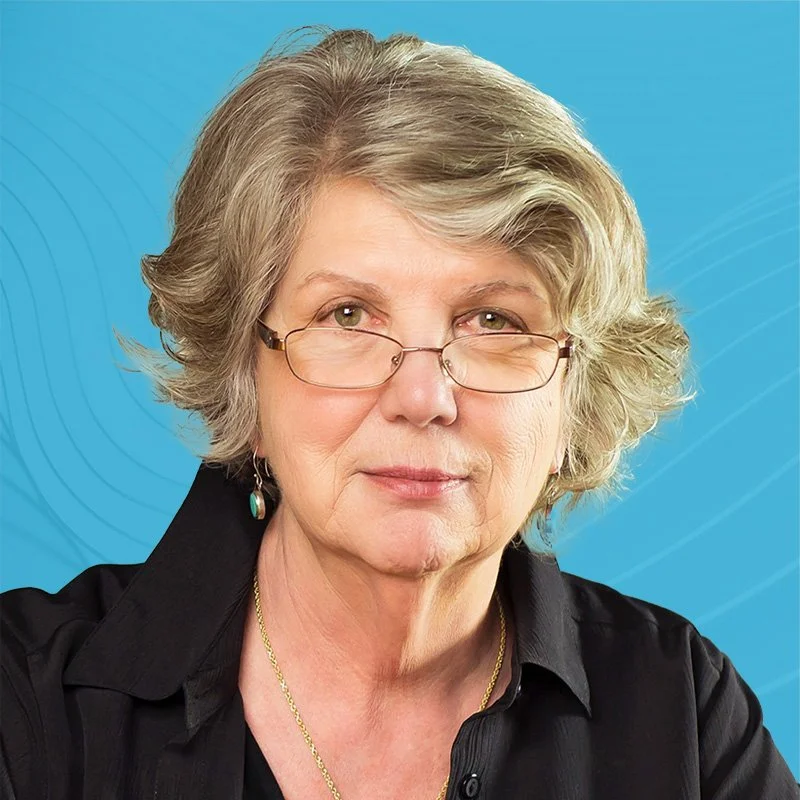
Marsha Linehan dared to do what had long seemed hopeless: she turned towards people whom many others had given up on—people experiencing severe emotional instability, suicidality and self-injury, people diagnosed with borderline personality disorder. She took their suffering seriously without looking away, and she believed unwaveringly in their capacity to change. From this conviction, DBT emerged at the University of Washington in Seattle: a therapy that does not set acceptance and change against each other, but holds them together. The precision of behavioural therapy and the practice of mindfulness drawn from the Zen tradition—for Marsha, these were not contradictions, but a unity.
Today, DBT is the most extensively researched treatment for people with borderline personality disorder. It has helped countless patients around the world build a life worth living—“a life worth living”, as Marsha called it. She knew from her own experience what she was talking about. When she later spoke publicly about her own history of suffering, she gave courage to many affected by similar struggles and made many clinicians more humble.
Marsha also left a profound mark on Germany. She came here often and gladly—as a teacher at workshops and conferences, but also as a Zen practitioner. Without her generous support, her curiosity and her willingness to share her knowledge, DBT in the German-speaking world would not be what it is today. The development of treatment programmes, training structures and further developments such as DBT-PTSD and TF-DBT owe an enormous amount to her. The Dachverband DBT e.V. is, in essence, one of the many fruits of her work.
Marsha led a truly extraordinary life: intense, rough, painful and warm-hearted, brilliant and deeply focused, then exuberant again. Anyone who met her never forgot her—her wit, her directness, her warmth and her tenacity. She could demand and challenge; she could laugh out loud; and she never stopped believing that we could do better.
A few years ago, I asked her what she would want written on her gravestone. “I need to think about that,” she said. At our next meeting: “I’m still thinking about it. This is important.” By the third time, she had her answer: “Write on my tombstone: And I said yes.” “Oh, Marsha,” I said, “nothing less would do for you, would it?” And we both had to laugh.
She was thinking of Mary at the Annunciation: a yes that embraces both the greatest joy and the deepest suffering. That was what mattered to Marsha—in her life as in her therapy: saying yes to reality as it is, and yes to the possibility of change. Yes to profound joy and profound pain.
In her final years, Marsha gradually began to leave us. She was well cared for and surrounded by love in Seattle, with her daughter Gerry by her side. She died peacefully, among her loved ones, to the sound of the Gregorian chant she so loved.
We are grieving. And we are profoundly grateful—for her work, for her courage and for her yes.
It is up to us to carry that yes forward: to the people she taught us never to give up on.